Deciding to undergo bariatric treatment is rarely a casual choice. People considering surgery may have already spent years trying different diets, exercise programmes and structured weight-management strategies.
Weight Loss Surgery can be considered for selected individuals with obesity when clinical criteria are met, but choosing surgery involves more than selecting a procedure. Patients need to understand preparation, long-term eating changes, follow-up requirements and how the operation fits into broader obesity management.
For individuals in Kharadi and across Pune, Maharashtra, asking detailed questions before surgery can make the decision more informed.
Am I Actually a Candidate
This should be one of the first questions.
Bariatric eligibility can depend on BMI, obesity-related medical conditions, previous treatment attempts and overall health.
The assessment may also consider conditions such as diabetes, sleep apnoea, hypertension, reflux and fatty liver disease.
A surgeon should evaluate the complete health profile rather than focusing only on body weight.
Which Procedure Fits My Situation
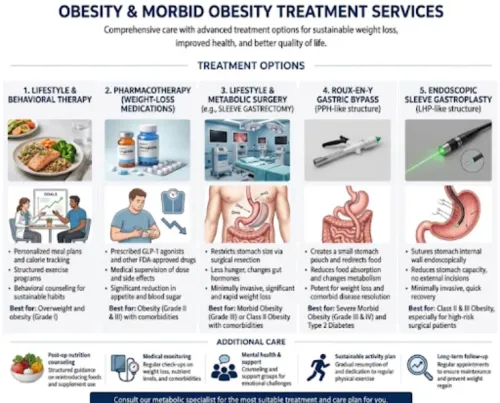
There are different types of Weight Loss Surgery, and no single operation is automatically appropriate for every patient.
Procedure selection may be influenced by:
- BMI
- Existing reflux
- Eating behaviour
- Previous abdominal surgery
- Metabolic conditions
- Nutritional considerations
- Individual surgical risk
Patients should understand why a particular procedure has been suggested and what alternatives are available.
What Preparation Is Required
Bariatric treatment begins before the operation.
Preoperative assessment can include blood tests and evaluations related to anaesthesia and existing medical conditions. Nutritional assessment may also form part of preparation.
Depending on the individual, additional investigations may be required.
Patients should provide complete information about medications, supplements, previous operations and current health conditions.
What Will Eating Look Like After Surgery
Postoperative eating is usually introduced gradually.
Patients may move through liquid and soft-food stages before progressing towards a more regular bariatric eating pattern. Portion size, protein intake, hydration and food quality become important considerations.
Instructions vary according to the procedure and clinical circumstances.
Will I Need Supplements and Follow Up
Long-term follow-up is an essential question rather than an optional extra.
Depending on the procedure, patients may require nutritional supplementation and periodic blood tests. Follow-up also provides an opportunity to identify nutritional issues, review eating patterns and monitor weight changes.
What Should I Know About Risks
Every operation has potential risks.
The relevant risks depend on the procedure, existing health conditions and individual circumstances. Patients should ask about early surgical complications as well as possible longer-term nutritional and gastrointestinal concerns.
At BariFit By Dr. Parmeshwar, patients considering bariatric treatment in Kharadi can undergo assessment to understand whether surgery is suitable and which approach may be considered according to their clinical profile.
A good bariatric consultation should leave a patient with more than the name of an operation. It should provide a realistic understanding of preparation, recovery, dietary changes, follow-up and the patient's own role in long-term weight management.
Keywords