Gallstones are sometimes discovered accidentally during an ultrasound performed for another reason. In other patients, they become apparent after repeated episodes of upper abdominal pain, often accompanied by nausea or discomfort after eating.
The presence of stones does not automatically answer what should happen next. Gall Bladder Stone Treatment should be planned around symptoms, complications and the patient's overall clinical picture.
For patients in Pune and throughout Maharashtra, this distinction is important when deciding whether surgery should be considered.
What symptoms can gallstones cause
Typical gallstone-related pain may occur in the upper abdomen, particularly toward the right side, and can sometimes extend toward the back or shoulder.
Symptoms can include:
- Episodes of upper abdominal pain
- Nausea
- Vomiting
- Discomfort after meals
Gallstones can also cause complications such as inflammation of the gall bladder, obstruction of the bile duct, jaundice and pancreatitis.
Severe persistent pain, fever or jaundice requires prompt medical assessment.
How Gall Bladder Stone Treatment is planned
The surgeon considers whether stones are producing symptoms and whether complications are present.
Ultrasound is commonly used to assess gallstones. Blood tests and other imaging may be required when there is concern about inflammation, jaundice or stones within the bile duct.
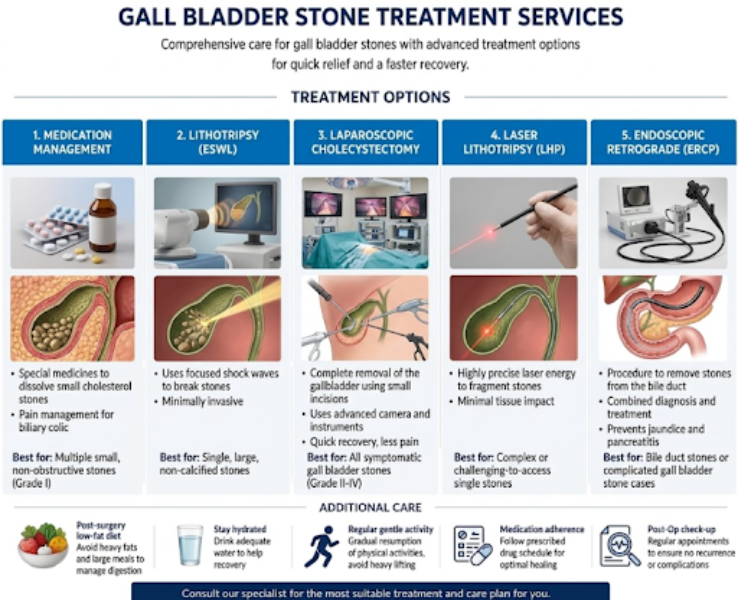
When symptomatic gallstones require surgery, treatment commonly involves removal of the gall bladder rather than simply taking stones out and leaving the gall bladder in place.
What happens during gall bladder surgery
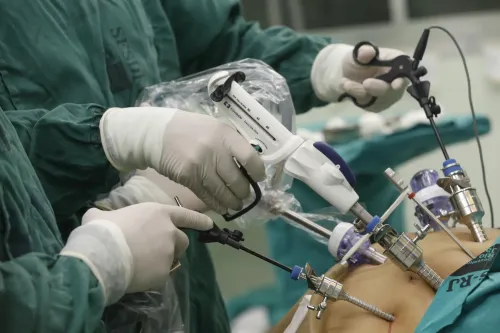
Laparoscopic cholecystectomy is a commonly used operation for symptomatic gallstones.
Several small incisions are made, and a camera and surgical instruments are used to detach and remove the gall bladder.
Open surgery may still be necessary in selected situations, and occasionally an operation that begins laparoscopically needs conversion for safety.
Preparation before treatment
Preoperative preparation can include blood investigations, imaging, anaesthesia assessment and review of medications.
Patients should tell their surgeon about blood-thinning medicines, diabetes treatment, allergies and previous abdominal operations.
Fasting instructions should be followed exactly on the day of surgery.
Recovery and post-treatment care
Many patients can begin walking relatively soon after uncomplicated laparoscopic surgery. Diet is resumed according to tolerance and medical advice.
Some people notice temporary changes in digestion after gall bladder removal, although many eventually return to a broadly normal diet.
Wounds should be kept and managed according to discharge instructions, and strenuous activity should be resumed only as advised.
Benefits and risks
Removing a gall bladder that is causing recurrent stone-related symptoms can prevent further attacks originating from that gall bladder and address complications when surgery is indicated.
Potential risks include bleeding, infection, bile leakage, injury to the bile duct or surrounding structures, retained bile duct stones and anaesthetic complications.
The individual risk should be discussed before surgery.
Questions patients frequently ask
Can medicines permanently dissolve all gallstones?
Medication has a limited role and is not a universal replacement for surgery in symptomatic gallstone disease.
Can I live without a gall bladder?
Yes. Bile continues to be produced by the liver after gall bladder removal.
Does every ultrasound-detected gallstone need surgery?
No. Management depends on symptoms, complications and individual circumstances.
At BariFit By Dr. Parmeshwar in Pune, patients can undergo assessment to determine whether gallstones explain their symptoms and whether surgical management is appropriate. Treatment decisions are stronger when based on the whole clinical picture rather than an ultrasound report alone.
Keywords