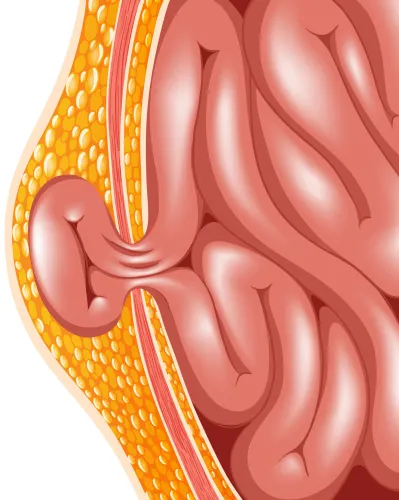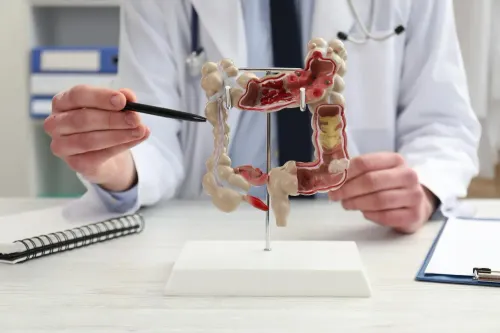
Appendicitis often begins with abdominal discomfort that can be mistaken for indigestion, gas or a minor stomach problem. The pattern can change over several hours, which is why worsening abdominal pain should not be ignored.
An Appendectomy is the surgical removal of the appendix and is a standard treatment when acute appendicitis is diagnosed and surgery is appropriate.
For people in Pune, knowing the warning signs and what happens after diagnosis can make an urgent situation easier to understand.
What symptoms can suggest appendicitis
Symptoms vary, but commonly reported features include:
- Abdominal pain that may move toward the lower right side
- Increasing tenderness
- Loss of appetite
- Nausea or vomiting
- Fever
- Pain that worsens with movement or coughing
- Changes in bowel habits
Not every patient develops the textbook pattern.
Several urinary, gastrointestinal and gynaecological conditions can produce similar pain, so diagnosis should be based on clinical assessment rather than symptoms alone.
How appendicitis is assessed
A doctor may evaluate the location and progression of pain, perform an abdominal examination and request blood tests.
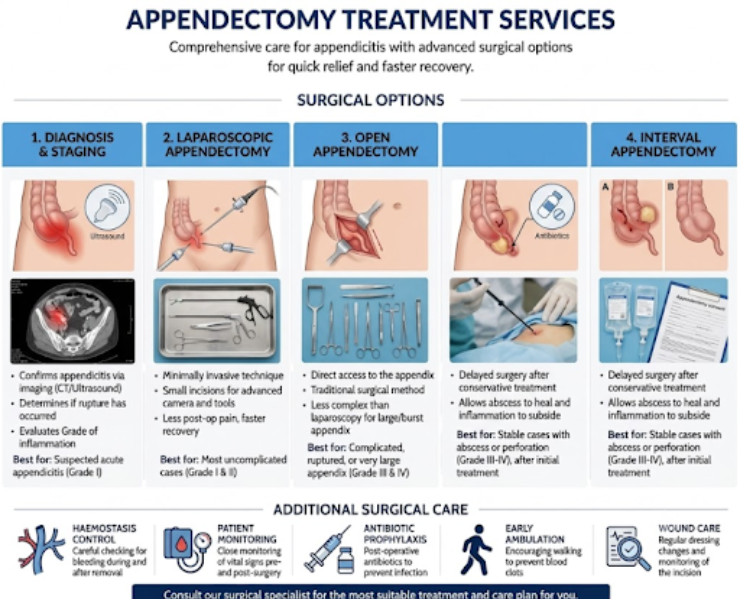
Ultrasound or CT imaging may be considered depending on the patient's presentation and clinical circumstances.
The goal is to determine whether the appendix is inflamed and whether complications such as perforation or an abscess may be present.
How an Appendectomy is performed
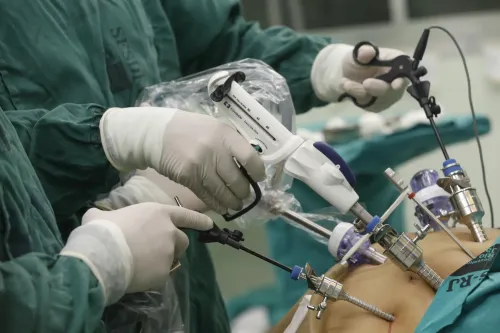
The appendix can be removed through a laparoscopic approach or an open incision.
Laparoscopic surgery uses small incisions, a camera and specialised instruments. Open surgery may be preferred or required in certain clinical situations.
The surgical team chooses the approach based on the patient's condition, disease severity and operative findings.
Recovery after appendix removal
Recovery depends partly on whether the appendix was uncomplicated or perforated.
Patients with uncomplicated appendicitis treated laparoscopically may recover more quickly than those who have infection spread within the abdomen or require a more extensive procedure.
After surgery, patients receive guidance about wound care, diet, movement, pain medication and return to work.
Heavy activity may be restricted for a period according to the surgeon's instructions.
Benefits and risks
Removing an inflamed appendix treats the source of appendicitis and helps prevent or manage complications associated with progression of the disease.
Possible surgical risks include bleeding, wound infection, intra-abdominal infection, injury to nearby structures and anaesthetic complications. Complicated appendicitis can carry additional risks.
What should happen after discharge
Patients should follow prescribed medication instructions, keep wounds appropriately cared for and gradually increase activity.
Increasing abdominal pain, persistent vomiting, high fever, wound discharge or other concerning symptoms should prompt timely medical review.
Frequently asked questions
Can someone live normally without an appendix?
Yes. Removal of the appendix does not usually require long-term dietary restrictions specifically because the organ is absent.
How soon can work resume?
It depends on the surgical approach, severity of appendicitis, recovery and type of work.
Does every case of abdominal pain need surgery?
No. Many conditions cause abdominal pain. Surgery follows appropriate diagnosis.
At BariFit By Dr. Parmeshwar, patients in Pune requiring surgical assessment can be evaluated according to their symptoms and clinical findings. With suspected appendicitis, timely diagnosis is particularly important because the condition can progress rather than simply remain unchanged.
Keywords