Heartburn is common, but persistent gastroesophageal reflux disease can affect much more than occasional comfort after meals. Some people experience frequent regurgitation, nighttime symptoms, chest discomfort or reflux that continues despite appropriate medical management.
For selected patients, Laparoscopic Nissen Fundoplication Surgery for GERD Treatment may be considered after proper evaluation confirms that an anti-reflux operation is appropriate.
Patients exploring GERD surgery in Pune should understand that symptoms alone are not enough to determine whether fundoplication is the right procedure.
What happens in GERD
GERD occurs when stomach contents repeatedly reflux into the oesophagus.
A weakened anti-reflux barrier at the junction between the oesophagus and stomach can contribute. A hiatus hernia may also be present in some patients.
Lifestyle measures and acid-suppressing medicines can control symptoms effectively for many people. Surgery is therefore not automatically the next step for every patient with heartburn.
What is Laparoscopic Nissen Fundoplication Surgery for GERD Treatment
Nissen fundoplication is an anti-reflux operation in which the upper part of the stomach, called the fundus, is wrapped around the lower oesophagus.
The aim is to reinforce the anti-reflux barrier.
When a relevant hiatus hernia is present, the hiatus may also need to be repaired as part of the operation.
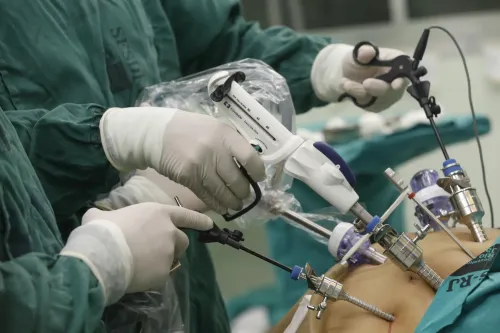
The procedure can be performed laparoscopically through small abdominal incisions in suitable patients.
Who may need evaluation for surgery
Surgical assessment may be appropriate in selected patients with objectively confirmed GERD, troublesome regurgitation, complications of reflux, a relevant hiatus hernia or other clinical reasons identified by the treating team.
Before surgery, testing may include upper gastrointestinal endoscopy and additional investigations depending on the patient's presentation.
Oesophageal pH monitoring and manometry may be used in selected cases to confirm reflux and evaluate oesophageal function.
These tests matter because conditions other than GERD can cause similar symptoms.
Preparing for fundoplication
Patients should provide details of current medicines, previous abdominal surgery, swallowing difficulties and other medical conditions.
The surgical team will provide fasting and medication instructions.
It is also important to discuss expectations about swallowing and eating during early recovery because the diet usually needs temporary modification.
Recovery and postoperative eating
Patients generally begin mobilisation soon after uncomplicated laparoscopic surgery.
Diet is commonly progressed gradually, with softer foods used during the early healing period according to the surgeon's protocol. Eating slowly, chewing thoroughly and avoiding large mouthfuls can be important during recovery.
Temporary swallowing difficulty, bloating or increased awareness of gas can occur.
Return to work depends on recovery and occupational demands.
Potential benefits
For properly selected patients, fundoplication can improve reflux control and reduce troublesome regurgitation.
The objective is to restore the mechanical anti-reflux barrier rather than simply suppress stomach acid.
Risks and long-term considerations
Potential complications include bleeding, infection and injury to nearby structures, along with general anaesthetic risks.
Procedure-specific concerns can include persistent difficulty swallowing, gas-bloat symptoms, inability to belch or vomit normally, recurrent reflux, wrap migration and recurrence of a hiatus hernia.
Patients should understand these possibilities before deciding on surgery.
Frequently asked questions
Does persistent heartburn automatically mean I need fundoplication?
No. GERD should be appropriately evaluated, and many patients are managed without surgery.
Will I stop reflux medicines immediately after the operation?
Medication decisions should follow the treating surgeon's individual plan.
Why are tests needed when I already know I have acidity?
Symptoms alone do not reliably establish the cause or mechanism of reflux. Preoperative testing helps confirm whether surgery addresses the actual problem.
At BariFit By Dr. Parmeshwar in Pune, patients with persistent GERD and hiatus hernia concerns can be assessed before an anti-reflux procedure is considered. The most important readiness indicator is not simply long-standing acidity but a diagnosis and investigation profile that supports the proposed operation.
Keywords