A pilonidal sinus can seem like a minor skin problem until it begins repeatedly swelling, discharging or becoming painful. The condition typically develops in the cleft between the buttocks and can create small openings or tracts beneath the skin.
Endoscopic Pilonidal Sinus Treatment is a minimally invasive approach that may be considered in selected patients.
For people seeking treatment in Pune, understanding what the technique involves can help set realistic expectations about recovery and recurrence.
What is a pilonidal sinus
A pilonidal sinus is a tract or cavity beneath the skin, commonly containing hair and inflammatory material.
Some people have a small opening with intermittent discharge. Others develop an acute abscess with significant pain, redness and swelling.
Treatment depends partly on whether the problem is an acute abscess, a chronic sinus or recurrent disease after previous surgery.
How Endoscopic Pilonidal Sinus Treatment works
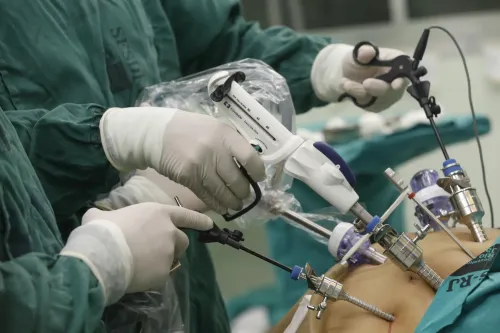
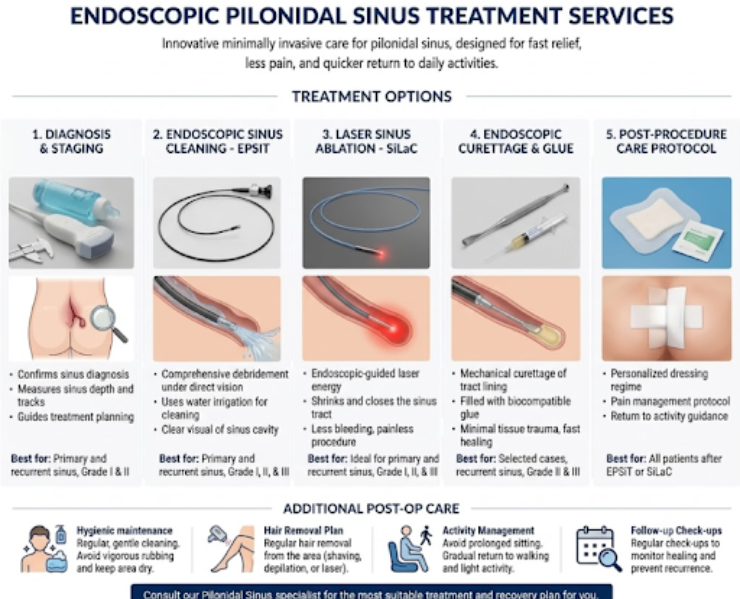
Endoscopic techniques allow the surgeon to inspect the sinus tract using a small scope.
Hair, debris and unhealthy tissue can be identified and removed through the sinus openings, with treatment of the tract performed according to the selected technique.
One potential advantage is avoiding the larger wound associated with some traditional excisional procedures.
However, the anatomy and extent of disease matter. Endoscopic treatment is not automatically suitable for every pilonidal sinus.
How it compares with conventional surgery
Traditional surgical approaches may involve removing the affected tissue and managing the resulting wound through different closure techniques.
An endoscopic approach aims to treat the tract through smaller access points.
Potential advantages in selected patients can include:
- Smaller wounds
- Less extensive tissue removal
- Earlier return to routine activity
- Simplified wound management in some cases
Procedure selection should consider disease extent, previous operations, branching tracts and surgeon assessment rather than scar size alone.
Preparation before the procedure
Patients should tell the surgeon about previous pilonidal procedures, recurrent abscesses, medications and other health conditions.
If there is an acute abscess, immediate management may differ from treatment of a chronic, non-acute sinus.
Preoperative instructions regarding fasting, medications and local preparation should be followed as directed.
Recovery and aftercare
Recovery varies according to disease extent and the procedure performed. Patients may receive instructions about keeping the area clean, wound dressing, activity and hair management.
Avoiding prolonged pressure on the area may be recommended during early recovery depending on the procedure.
Long-term attention to the cleft area and hair control may form part of recurrence-prevention advice.
Benefits and possible risks
A minimally invasive technique may reduce the size of the surgical wound and support faster functional recovery in appropriately selected cases.
Possible problems include bleeding, infection, persistent discharge, incomplete healing and recurrence. No pilonidal procedure can promise that the condition will never return.
Common questions
Can an acute painful abscess be treated the same way as a chronic sinus?
Not necessarily. An abscess may require a different immediate treatment plan.
Can the sinus recur after endoscopic treatment?
Yes. Recurrence remains possible.
How quickly can I sit and work normally?
This depends on the extent of disease, procedure and individual recovery.
At BariFit By Dr. Parmeshwar, patients in Pune can be evaluated to determine the extent of pilonidal disease before selecting a surgical technique. A smaller procedure is useful only when it adequately addresses the underlying tract.
Keywords