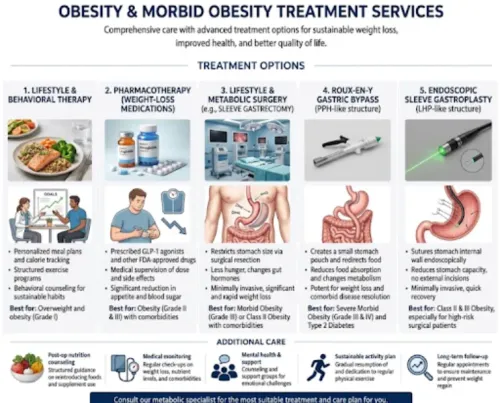
Weight management is often presented as a simple equation of eating less and exercising more. In reality, obesity is influenced by multiple biological, behavioural, environmental and medical factors. For someone who has repeatedly lost weight and regained it, simply receiving another generic diet plan may not address the complete problem.
Obesity and Morbid Obesity Treatment should begin with an assessment of health risks, weight history and factors affecting long-term weight management.
For individuals in Kharadi and across Pune, Maharashtra, a structured medical evaluation can help determine whether lifestyle intervention, medical management, bariatric treatment or a combination of approaches should be considered.
Obesity Is More Than a Number on the Scale
Body mass index is commonly used as a screening measure, but weight-related health assessment should consider much more.
Obesity can be associated with conditions such as:
- Type 2 diabetes
- High blood pressure
- Sleep apnoea
- Joint problems
- Fatty liver disease
- Reduced mobility
- Gastroesophageal reflux
- Cardiovascular risk factors
The presence and severity of these conditions can influence treatment planning.
Why Previous Weight Loss Attempts Matter
A proper evaluation includes understanding what the patient has already tried.
Someone who has made one short-term attempt at weight management has a different history from a person who has spent years cycling through restrictive diets, exercise programmes and medications.
Useful information includes:
- Highest and lowest adult weight
- Previous structured weight-loss attempts
- Eating patterns
- Physical activity
- Current medications
- Existing medical conditions
- Sleep patterns
- Previous weight regain
These details provide context for deciding what level of treatment may be appropriate.
Treatment Can Involve Different Levels of Care
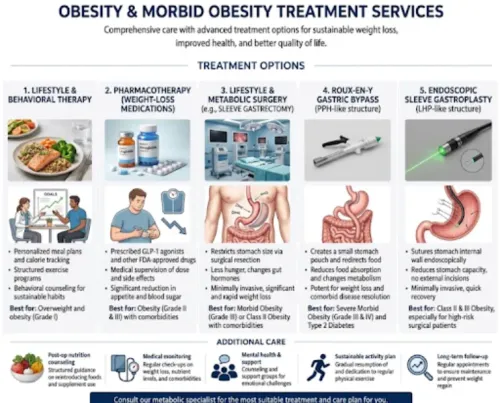
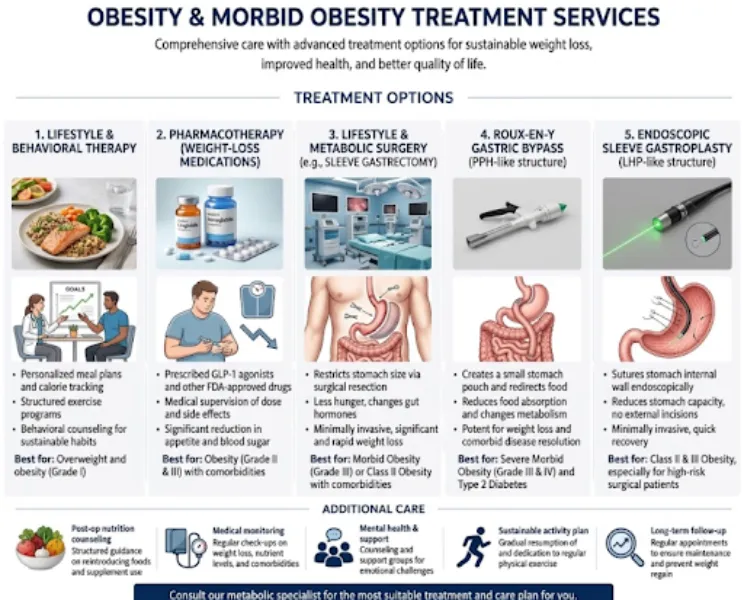
There is no single Obesity and Morbid Obesity Treatment that suits everyone.
Management may include nutritional changes, physical activity, behavioural support and medical treatment when appropriate.
For selected individuals with severe obesity, bariatric surgery may also become part of the discussion. Eligibility depends on factors including BMI, obesity-related conditions, previous treatment attempts and overall health.
Surgery should not be viewed as an isolated procedure. Long-term nutritional monitoring and lifestyle changes remain important after bariatric treatment.
When Is It Time to Consider a Different Strategy
Repeated weight regain can be a sign that the current approach needs reassessment rather than simply greater restriction.
People may benefit from medical evaluation when:
- Weight is contributing to other health problems
- Previous structured attempts have not produced sustainable results
- Mobility is becoming increasingly difficult
- Obesity is affecting daily functioning
- Weight-related conditions are progressing
- Bariatric treatment is being considered
At BariFit By Dr. Parmeshwar, obesity assessment can include discussion of medical history, previous weight-management efforts and potential bariatric options where clinically appropriate.
For patients in Kharadi and the wider Pune region, effective obesity care starts by recognising that weight management is not identical for every individual. Understanding the severity of obesity, associated health conditions and previous treatment history allows the next step to be based on clinical needs rather than another short-lived solution.
Keywords