Gallstones are often discovered unexpectedly during an ultrasound performed for another reason. In other cases, they become difficult to ignore because of recurring pain after meals, nausea or episodes of upper abdominal discomfort.
The need for Gall Bladder Stone Treatment is not determined by the scan report alone. Symptoms, complications, gallbladder condition and overall health all influence the treatment decision.
For patients in Kharadi and elsewhere in Pune, Maharashtra, understanding the difference between incidental stones and symptomatic gallstone disease can make the next step clearer.
When Gallstones Become Symptomatic
Gallstones form within the gallbladder, a small organ located beneath the liver. Many people may have stones without experiencing symptoms.
Problems can arise when a stone interferes with the normal flow of bile.
A typical gallstone attack may involve pain in the upper right or upper middle abdomen, sometimes occurring after a heavy or fatty meal. Pain may extend towards the back or right shoulder.
Other possible symptoms include:
- Nausea
- Vomiting
- Abdominal bloating
- Repeated episodes of upper abdominal pain
- Tenderness during inflammation
Fever or jaundice accompanying abdominal pain requires prompt medical assessment because these features may indicate complications.
Why Medication Does Not Solve Every Gallstone Problem
Patients sometimes expect tablets to permanently remove gallstones. Management is more complex.
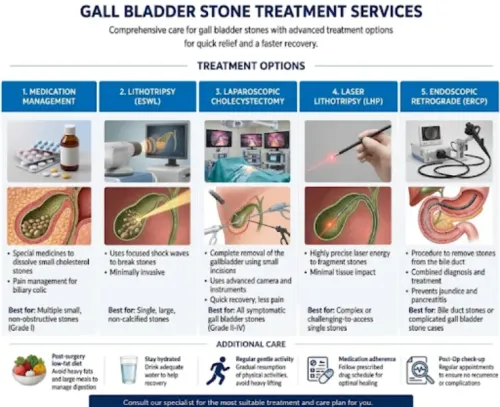
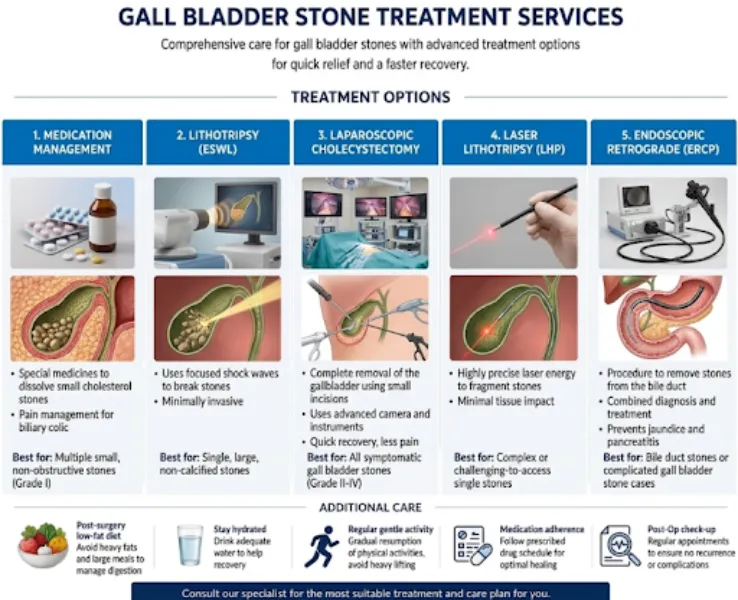
For symptomatic gallstones, surgical removal of the gallbladder is commonly considered because simply treating individual pain episodes does not remove the underlying source of recurring stones.
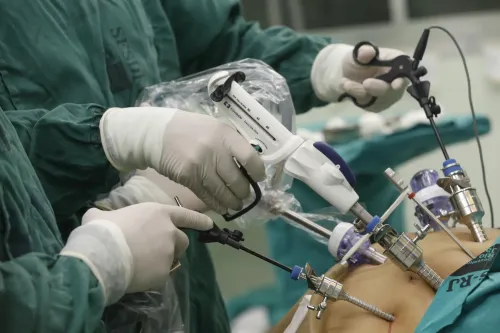
The standard operation is generally laparoscopic cholecystectomy, in which the gallbladder is removed through small abdominal incisions.
What Should Be Evaluated Before Surgery
Before planning Gall Bladder Stone Treatment, the surgeon reviews more than whether stones are visible.
Assessment may involve:
- Pattern and frequency of pain
- Ultrasound findings
- Gallbladder wall changes
- Liver function tests when indicated
- Evidence of infection
- Possible stones within the bile duct
- Previous abdominal procedures
- General fitness for anaesthesia
Additional imaging may be needed when bile duct stones or other complications are suspected.
What Happens Without a Gallbladder
A common concern is whether digestion becomes impossible after gallbladder removal.
The liver continues producing bile. Instead of being stored in the gallbladder, bile flows more continuously into the intestine.
Many patients can gradually return to a normal diet after recovery, although temporary dietary adjustments may be recommended following surgery.
Questions to Ask Before Making a Decision
If gallstones have been identified, useful questions include:
- Are my symptoms actually being caused by gallstones?
- Is gallbladder removal necessary now?
- Are there signs of inflammation?
- Could a bile duct stone be present?
- What tests are needed before surgery?
- What dietary changes are recommended after the procedure?
- When can regular activities resume?
BariFit By Dr. Parmeshwar provides evaluation for gallbladder and other gastrointestinal surgical conditions in Kharadi. The aim of consultation is to understand the symptoms, investigation findings and appropriate treatment options rather than treating an ultrasound finding in isolation.
Gallstones do not require the same management in every person. The presence of recurring symptoms or complications is what makes individual surgical assessment particularly important.
Keywords