

Seeing blood after passing stool can be alarming. While piles are one possible cause, rectal bleeding should not automatically be assumed to come from haemorrhoids without appropriate evaluation.
Piles, medically known as haemorrhoids, are swollen vascular structures around the anus or lower rectum. Appropriate Piles Treatment depends on whether the haemorrhoids are internal or external, their severity and the symptoms they are producing.
People in Kharadi and across Pune, Maharashtra, experiencing repeated bleeding, discomfort or prolapse can benefit from understanding how treatment decisions are generally made.
Common Symptoms Associated With Piles
Haemorrhoids do not produce identical symptoms in everyone.
Possible symptoms include:
- Bright red bleeding during bowel movements
- Itching around the anus
- A lump near the anal opening
- Discomfort while sitting
- Tissue protruding during bowel movements
- Mucus discharge
- Pain when an external haemorrhoid becomes thrombosed
Constipation and repeated straining can contribute to haemorrhoidal problems. Spending prolonged periods on the toilet may also increase pressure in the area.
Why Diagnosis Comes Before Treatment
Not every episode of rectal bleeding is caused by piles.
Anal fissures, inflammatory conditions, polyps and other colorectal problems may produce bleeding or similar symptoms. The patient's age, bowel habits, duration of symptoms and other warning signs influence what evaluation may be required.
Medical assessment becomes particularly important when bleeding is recurrent, bowel habits have changed, symptoms are worsening or the diagnosis is uncertain.
Conservative Management Can Be Enough in Some Cases
Mild haemorrhoidal symptoms may improve when constipation and straining are addressed.
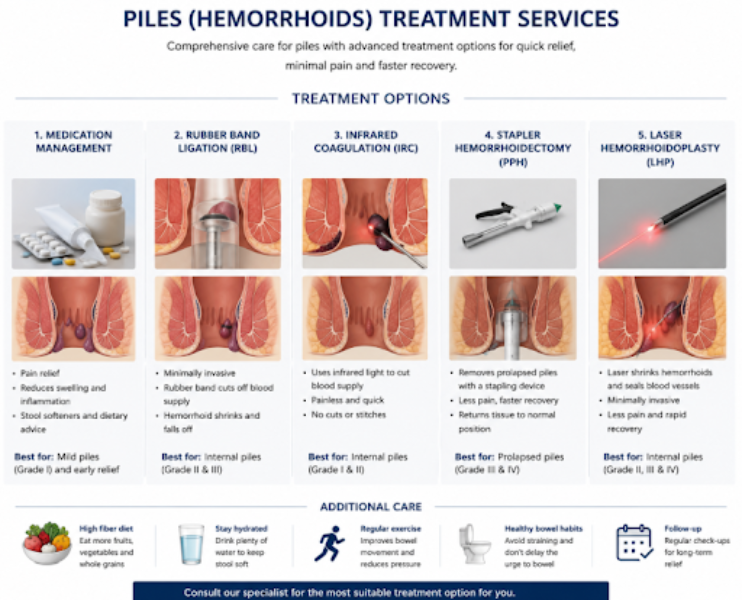
Depending on individual circumstances, initial management may include:
- Increasing dietary fibre
- Maintaining adequate fluid intake
- Avoiding excessive straining
- Staying physically active
- Developing regular bowel habits
- Avoiding prolonged toilet sitting
Medication may also be recommended for symptom management where appropriate.
These measures address factors that can aggravate haemorrhoids, but persistent or advanced symptoms may require procedural treatment.
When Procedures May Be Discussed
The choice of Piles Treatment depends on the type and grade of haemorrhoids as well as the patient's symptoms.
Procedural options vary and can include office-based treatments and surgical approaches. No single technique is appropriate for every patient.
Important considerations include:
- Whether bleeding is persistent
- Whether haemorrhoids prolapse
- Whether prolapsed tissue returns spontaneously
- Frequency of symptoms
- Previous treatments
- Presence of external disease
- Impact on daily activities
A clinical examination helps determine which options are relevant.
Do Not Ignore Persistent Rectal Bleeding
Repeatedly treating presumed piles with over-the-counter products without confirming the cause can delay appropriate diagnosis.
At BariFit By Dr. Parmeshwar, assessment of anorectal conditions can help identify whether symptoms are related to haemorrhoids or another condition requiring a different management approach.
For people living or working in Kharadi and surrounding Pune areas, the practical starting point is a proper diagnosis. Once the cause and severity are established, conservative measures, procedural treatment or surgery can be considered according to individual requirements.