Persistent heartburn or regurgitation despite treatment does not automatically mean that fundoplication is the right next step. You need to establish that reflux is causing the symptoms, identify any hiatal hernia or movement disorder, and compare the operation’s likely benefits with its trade-offs and alternatives.
Key takeaways
- Confirm reflux with objective testing before considering fundoplication.
- Take PPIs at the correct time and complete prescribed twice-daily courses.
- Ask for manometry to assess swallowing muscles before a Nissen wrap.
- Compare fundoplication with medicines, endoscopic treatment, and gastric bypass.
When persistent reflux symptoms justify a surgical evaluation
Persistent symptoms alone do not prove that surgery will help. Before considering fundoplication, complete lifestyle measures such as avoiding meals within three hours of lying down, elevating the head of the bed for night symptoms, and reducing personal triggers. Take a PPI 30–60 minutes before a meal; follow a properly timed twice-daily course when prescribed.
Missed doses, incorrect proton-pump inhibitor timing, and inadequate duration are not true PPI treatment failure.
1. Confirm the symptom pattern. Troublesome regurgitation and persistent acid reflux despite optimized treatment create a stronger reason for evaluation than vague bloating or throat irritation.
2. Check the cause. Separate non-acid reflux versus acid refluxisation—“acid refluxisation” is not a standard diagnosis—from reflux hypersensitivity, functional heartburn, achalasia, gastroparesis, and other causes of chest discomfort, cough, or throat symptoms.
3. Match symptoms to objective findings. Abnormal acid exposure, meaningful symptom association, erosive oesophagitis, Barrett’s oesophagus with documented reflux, or a significant hiatal hernia supports discussion of surgery. Normal acid exposure without symptom association makes fundoplication less likely to help.
Functional heartburn and many cases of reflux hypersensitivity are treated with neuromodulation, behavioural therapy, or other targeted care rather than tightening the gastroesophageal junction. If GERD remains uncertain, reflux monitoring and endoscopy should precede a surgical decision.
Which tests confirm reflux before fundoplication
Upper gastrointestinal endoscopy checks for erosive oesophagitis, Barrett’s oesophagus, peptic stricture, narrowing, and hiatal hernia. Severe erosive oesophagitis or a clearly abnormal reflux study can establish GERD, but a normal endoscopy does not exclude reflux.
| Test | What it measures or shows | When it helps |
|---|---|---|
| Ambulatory pH monitoring | Acid exposure over time | Usually off PPI therapy when GERD has not been established |
| pH-impedance monitoring | Acid, weakly acidic, and non-acid reflux, plus symptom-event timing | On PPI therapy when established GERD remains symptomatic |
| Contrast swallow test | Hiatal hernia size and position, narrowing, emptying, or slipped or obstructed anatomy | When a structural problem needs clarification |
Monitoring off PPI therapy tests whether reflux exists. Monitoring on PPI therapy tests whether ongoing reflux explains symptoms despite treatment. Normal acid exposure without a meaningful symptom association makes fundoplication less likely to help; functional heartburn and many cases of reflux hypersensitivity need targeted treatment rather than a tighter gastroesophageal junction.
Bring these records to the surgical consultation:
- Endoscopy findings and biopsy results
- Acid-exposure values and symptom-event associations from reflux monitoring
- Any contrast-swallow images and the written report
The pattern matters more than a single symptom. Documented reflux plus troublesome regurgitation, erosive disease, Barrett’s oesophagus, or a significant hiatal hernia provides a stronger basis for surgery than persistent heartburn alone.
Why manometry matters and what a Nissen wrap changes
High-resolution oesophageal manometry is required before antireflux surgery because it rules out disorders that a wrap could worsen; it does not prove GERD. The test measures lower oesophageal sphincter pressure, the strength and sequence of oesophageal contractions, and whether the oesophagus can propel food toward the stomach.
It can reveal achalasia, absent contractility, and major motility disorders that mimic reflux. Exclude achalasia before fundoplication.
The findings inform the choice of partial fundoplication versus complete fundoplication:
| Option | What changes | Main trade-off |
|---|---|---|
| Nissen fundoplication 360-degree wrap | A complete wrap around the lower oesophagus | Strong reflux barrier, with greater risk of postoperative dysphagia |
| Partial fundoplication | A looser, incomplete wrap | May reduce swallowing difficulty, with a different balance of reflux control |
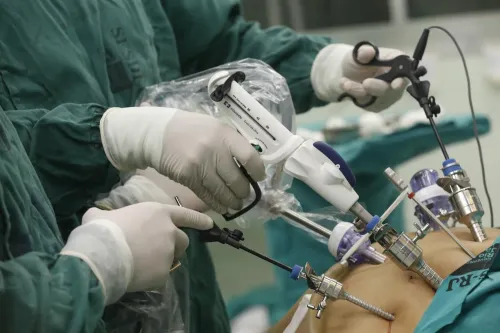
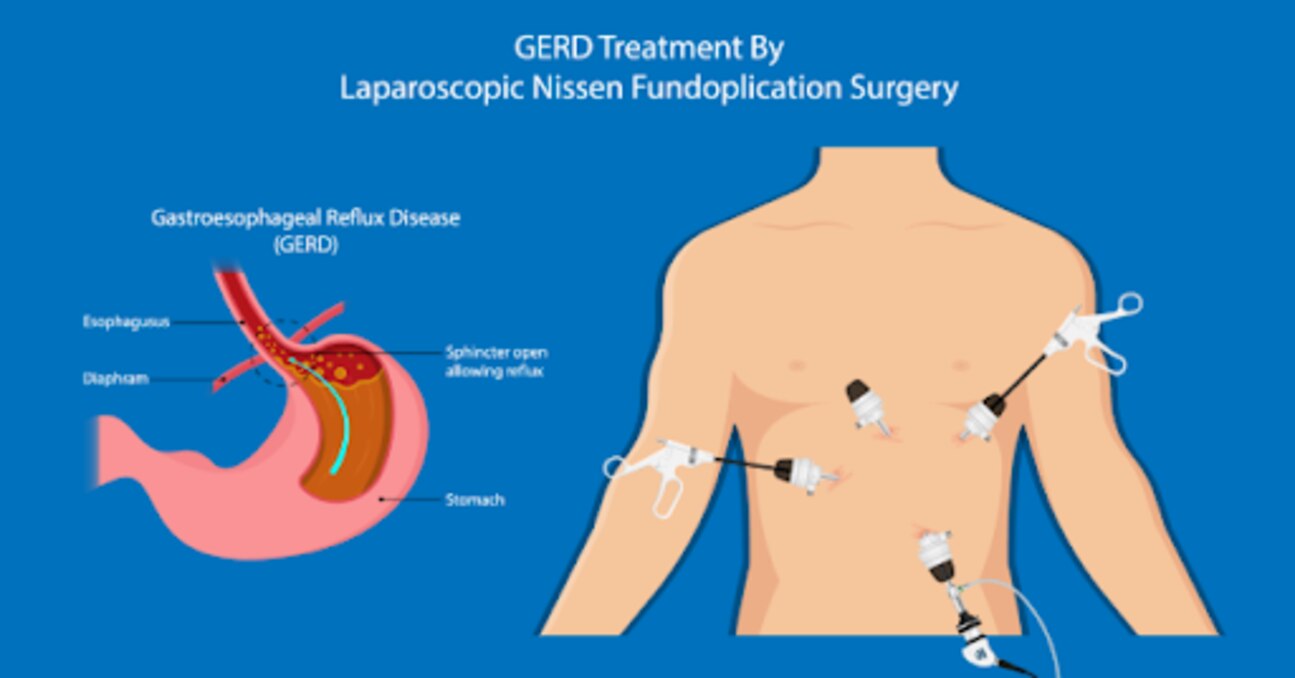
The operation loosens and mobilises the upper stomach, wraps it around the lower oesophagus, and repairs the diaphragmatic hiatus when a hiatal hernia is present. It rebuilds the antireflux barrier; it does not remove acid already in the oesophagus or treat every symptom called heartburn.
Early dysphagia often improves. Persistent difficulty swallowing needs assessment for a tight or displaced wrap, recurrent hernia, stricture, or an unrecognised motility disorder. Gas-bloat symptoms, difficulty belching, and sometimes inability to vomit are recognised consequences to discuss before consent.
How surgery compares with medicines, endoscopic treatment, and bypass
Continued PPI treatment remains reasonable when symptoms are controlled, reflux is objectively documented, and no important anatomical problem requires repair. It avoids operative risks, but it will not close a large hiatal hernia or reliably stop regurgitation for every patient.
| Option | Main advantage | Main limitation or deciding factor |
|---|---|---|
| Continued PPI treatment | Controls acid without surgery | Does not repair a hiatal hernia; regurgitation may persist |
| Nissen fundoplication | Reconstructs the antireflux barrier and repairs the hiatus | Dysphagia, gas-bloat, wrap slippage, recurrent hernia, and renewed PPI use can occur |
| Magnetic sphincter augmentation | Uses a ring of magnetic beads around the lower oesophageal sphincter | Device considerations, swallowing effects, belching, and anatomy require assessment |
| Transoral incisionless fundoplication | Creates an endoscopic partial valve without abdominal incisions | Hiatal-hernia size, durability, and symptom control can limit suitability |
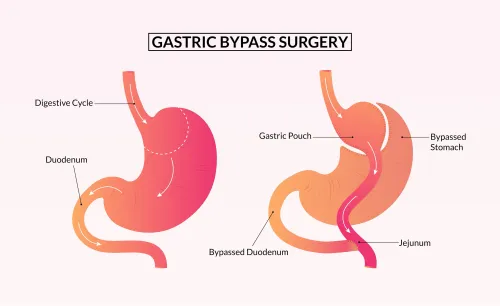
| Roux-en-Y gastric bypass for obesity and GERD | Addresses substantial obesity and reflux together | It is a major metabolic operation, not simply an alternative fundoplication |
Nissen fundoplication does not treat obesity, and excess weight can increase mechanical stress on a repaired hiatus. Compare weight, hernia anatomy, reflux-monitoring results, oesophageal motility, symptom pattern, medication goals, and your tolerance for dysphagia or gas-bloat rather than choosing by procedure name.
Surgery is not a guaranteed permanent way to avoid medication. Recurrent reflux, wrap slippage, recurrent hernia, or side effects can lead to renewed PPI use, endoscopic treatment, or revision surgery; revision is more complex than the original operation.
Ask how persistent dysphagia would be investigated and how the plan changes if symptoms are not caused by reflux.
The decision checklist for a consultation in Kharadi or Pune
Persistent heartburn alone does not justify agreeing to fundoplication. Take these fundoplication consultation questions to a surgeon and request answers tied to your reports:
1. Is there objective GERD evidence, and did your symptoms occur during recorded reflux events on pH or pH-impedance monitoring?
2. Was your PPI taken 30–60 minutes before a meal, at the prescribed dose, and for the full recommended duration? If twice-daily treatment was prescribed, was each dose timed correctly?
3. Did endoscopy find erosive oesophagitis, Barrett’s oesophagus, a peptic stricture, or a hiatal hernia? A normal endoscopy does not exclude reflux.
4. What does manometry show about oesophageal movement, and why is a complete Nissen wrap preferred over a partial wrap? Ask how the choice changes your risk of postoperative dysphagia.
5. What did the contrast swallow show? Ask how an abnormal result, such as narrowing, delayed emptying, a large hernia, or altered anatomy, would change the operation or require further testing.
6. Which symptom is the operation expected to treat? Regurgitation may respond differently from throat clearing, cough, bloating, or chest pain caused by another condition.
7. What is the plan for early swallowing difficulty, gas-bloat symptoms, recurrent reflux after fundoplication, and possible future PPI use?
BariFit By Dr Parmeshwar can help patients in Kharadi and Pune review whether the test results, proposed wrap, and personal priorities fit together before consent.
Related service
Anti-Reflux Surgery for GERD and Hiatus Hernia Anti-Reflux Surgery for GERD and Hiatus Hernia Anti-Reflux Surgery is an advanced surgical treatment designed to provide long-term relief from Gastroesophageal Reflux Disease (GERD) and Hiatus... View service → |
Frequently asked questions
When should persistent reflux symptoms prompt a surgical evaluation?
Consider evaluation after persistent, objectively confirmed reflux despite correctly timed PPI treatment and lifestyle measures, or when complications or medication intolerance affect care.
Which tests confirm reflux before fundoplication?
Upper endoscopy checks for oesophagitis, Barrett’s oesophagus, strictures, and other causes. Ambulatory pH or pH-impedance monitoring measures acid and non-acid reflux, especially when endoscopy is normal.
Why is manometry needed before a Nissen fundoplication?
High-resolution manometry measures oesophageal movement and the lower oesophageal sphincter. It helps exclude achalasia and other motility disorders and guides whether a full wrap is appropriate.
How does fundoplication compare with medicines, endoscopic treatment, and gastric bypass?
PPIs control acid without repairing the valve. Endoscopic treatments suit selected patients but have different durability and eligibility limits. Gastric bypass can treat reflux while addressing obesity, but it is a larger metabolic operation.
What should you bring to a reflux surgery consultation in Pune or Kharadi?
Bring your medication list and doses, symptom and meal records, endoscopy reports, pH monitoring results, manometry findings, prior scans, and a record of previous treatments and their effects.