
Robotic assistance is used for selected operations when precise dissection, suturing or work in a confined space could help the surgeon complete the planned repair through small access points. By the end, you will know which procedures may suit it, how it differs from laparoscopy and open surgery, what testing and risks matter, and why the final choice depends on your anatomy and clinical condition.
Key takeaways
- Robotic surgery is surgeon-controlled, not autonomous.
- Ask which approach fits your anatomy, procedure and surgeon’s experience.
- Conversion to laparoscopy or open surgery can be necessary for safety.
- Robotic assistance does not eliminate bleeding, infection or anastomotic risks.
Which operations can use robotic assistance, and what happens during them?
Robotic gastrointestinal surgery is surgeon-controlled, not autonomous. The surgeon places small ports, inserts a camera and wristed instruments, and operates from a console while viewing a magnified three-dimensional field. Every dissection, stapling, suture, anastomosis and organ removal remains under direct surgeon control.
| Operation | What the surgeon physically does | When robotic assistance may fit |
|---|---|---|
| Robotic hiatal-hernia repair | Reduces the stomach, dissects the oesophagus, closes the diaphragm opening with sutures and may add mesh selectively. | A large or technically difficult hiatus defect |
| Fundoplication | Wraps the upper stomach around the lower oesophagus and sutures it in place to limit reflux. | Anti-reflux surgery requiring precise intracorporeal suturing |
| Ventral hernia repair | Frees adhesions, closes the abdominal-wall defect and positions mesh in an appropriate tissue plane. | Feasible minimally invasive abdominal-wall reconstruction |
| Incisional hernia repair | Releases scar-related adhesions, restores the abdominal-wall layers and secures mesh. | Selected postoperative hernias without contamination or emergency strangulation |
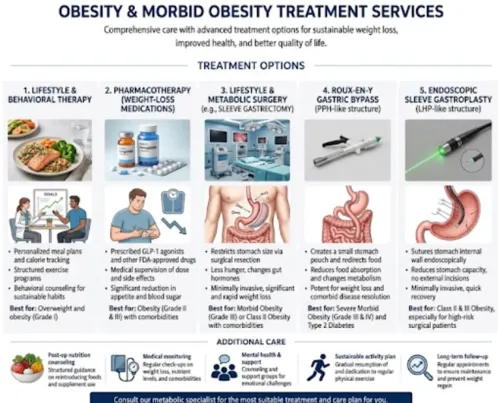
| Sleeve gastrectomy | Removes part of the stomach with a stapler, leaving a narrow gastric tube, then checks the staple line. | Revisional, high-body-mass-index or technically demanding cases |
| Gastric bypass or colorectal resection | Divides and reconnects the stomach or bowel, creates an anastomosis and checks it for leakage; cancer surgery still requires proper margins and lymph-node assessment. | Difficult anatomy, dense adhesions or a narrow pelvis |
Robotic assistance can also support other gastrointestinal resections, but it does not make every operation safer or suitable. Extensive adhesions, unstable emergency conditions, very large or complicated hernias, advanced cancer or unsafe anatomy can favour open surgery.
For any proposed operation, ask which part requires robotic assistance and why laparoscopy or open surgery is not preferable. Comparative evidence has not consistently shown better reflux control, fewer recurrences or fewer complications after robotic hiatal-hernia repair or fundoplication.
How robotic surgery differs from laparoscopy and open surgery
Robotic surgery differs from laparoscopy mainly through control and dexterity, not through the basic operation. In surgeon-controlled robotic surgery, you place ports, view magnified images at a console, and direct every dissection, stapling, suture and anastomosis; the robot does not act independently.
| Option | Instrument and camera control | Surgeon position and tactile feedback | Incisions and operating time |
|---|---|---|---|
| Robotic | Wristed instruments articulate inside the body; the surgeon controls the camera and instruments from a console. | Seated, with a stable three-dimensional view; no true fingertip feel, so force is judged visually. | Several small port incisions; docking and setup can lengthen the case, especially early in a team’s experience. |
| Laparoscopic | Rigid instruments move around fixed tips; an assistant often holds or steers the camera. | Standing at the table; two-dimensional or three-dimensional screen view; little or no tactile feedback. | Several small port incisions; setup is usually quicker, while difficult suturing can take longer. |
| Open | Hands and conventional instruments work directly through one larger incision. | Standing beside the patient; direct touch and tissue tension are available. | A larger incision; operating time varies, but recovery and wound impact are usually greater. |
The choice in robotic versus laparoscopic surgery depends on anatomy, adhesions, pelvic access, the planned suturing and the surgeon’s experience. Robotic versus open surgery also requires weighing exposure against wound burden. Extensive adhesions, emergency bleeding, instability, a very large hernia or unsafe cancer dissection can favour open surgery.
Bleeding, organ injury, poor exposure or anaesthetic intolerance can prompt conversion; that is a safety decision, not automatically a failure.
How robotic hiatal-hernia, anti-reflux and bariatric operations are selected
A robotic hiatal-hernia or anti-reflux operation repairs the diaphragm opening, returns the stomach below it and restores the valve at the lower oesophagus. The surgeon uses wristed instruments to dissect the mediastinum, close the diaphragmatic crura with sutures and, when indicated, perform a robotic fundoplication by wrapping the stomach’s fundus around the oesophagus.
Selection starts with anatomy and function, not the robot. Upper endoscopy checks oesophagitis, Barrett’s oesophagus, ulcers or another cause of symptoms. A contrast study shows reflux, obstruction, stomach position and the size or movement of the hernia.
Oesophageal manometry and pH monitoring assess muscle coordination and acid exposure; abnormal motility can change the type of anti-reflux repair.
| Operation or situation | What guides the operation | When robotic assistance may be considered |
|---|---|---|
| Primary sleeve gastrectomy | Obesity treatment, stomach anatomy and reflux status | Technically feasible, but studies have not shown consistent advantages over laparoscopy; longer operating time and higher cost matter |
| Roux-en-Y gastric bypass | Obesity severity, diabetes, reflux and prior operations | Consider it when complex anatomy, revisional surgery or a large hiatal hernia makes suturing and dissection demanding |
| Revisional bariatric surgery | Previous staple lines, leaks, adhesions or failed weight-loss procedure | More likely to justify robotic assistance because reconstruction and adhesiolysis require precise suturing |
| Sleeve versus bypass with reflux | Sleeve can aggravate reflux; bypass can address obesity with significant reflux | Choose the operation first; select the robot only if its control helps with the technical difficulty |
Robot assistance does not decide between sleeve gastrectomy and bypass. The surgeon makes that choice, then weighs experience, access, cost and operative complexity against conventional laparoscopy.
Where robotic hernia and colorectal surgery may help—and where it may not
Robotic ventral hernia repair and robotic incisional hernia repair are most useful when minimally invasive access is feasible but abdominal-wall reconstruction is technically demanding. Wristed instruments and a stable three-dimensional view can make intracorporeal suturing, careful adhesiolysis and extraperitoneal mesh placement more manageable, especially around awkward defect edges.
An open repair may be safer when the hernia is:
- Contaminated or strangulated
- Very large or anatomically complex
- Associated with adhesions that prevent safe minimally invasive access
Robotic colorectal surgery can improve instrument control for intracorporeal suturing and anastomosis in a narrow pelvis or challenging anatomy. During rectal cancer surgery, however, better reach does not replace accurate tumour clearance, sound lymph-node technique, appropriate patient selection or an experienced team.
| Procedure | Comparative evidence |
|---|---|
| Rectal cancer surgery | The ROLARR trial found conversion to open surgery in about 8% of robotic cases versus 12% of laparoscopic cases, without a statistically significant reduction or improvement in other short-term and oncologic endpoints. |
| Inguinal hernia repair | The RIVAL trial found that robotic repair took longer and cost more; pain, complications and one-year patient-reported outcomes were broadly similar to laparoscopy. |
| Hiatal or antireflux surgery | Robotic suturing and mediastinal dissection may feel easier, but studies have not consistently shown better reflux control, lower recurrence or fewer complications. |
The robot improves access, not the underlying operation.
Risks, conversion and the practical decision about robotic surgery
Robotic surgery is not automatically safer or better. It still requires general anaesthesia and carbon dioxide insufflation, and carries risks including bleeding, infection, blood clots, anaesthetic complications, bowel or organ injury, leaks and longer operating time.
Conversion to open surgery can follow bleeding, dense adhesions, poor exposure, organ injury, unstable vital signs or a dissection that is not oncologically safe. It is a safety decision, not proof that the operation failed.
| Option | Main trade-off | Recovery and cost |
|---|---|---|
| Robotic surgery | More precise instrument articulation, but docking, disposable instruments and operating-room time increase robotic surgery cost | Recovery may resemble laparoscopy when uncomplicated |
| Laparoscopic surgery | Usually avoids platform costs and often takes less setup time, but instruments have less articulation | Small incisions and recovery often remain favourable |
| Open surgery | Direct access helps with extensive adhesions, emergencies, unstable patients, very large hernias or advanced cancer | Larger incision usually means more pain and longer recovery |
Comparative evidence has not shown consistent advantages for robotic bariatric, hiatal-hernia or inguinal-hernia surgery. ROLARR found conversion rates of about 8% with robotic and 12% with laparoscopic rectal-cancer surgery, without significant overall benefit. A surgeon at BariFit By Dr Parmeshwar should match the approach to your anatomy and risk, not the equipment.
Ask these questions before consenting:
- What specific feature of my scan or examination makes robotic surgery preferable?
- What is your expected operating time, total robotic surgery cost and likely recovery?
- What would trigger conversion to open surgery, and how often does that occur in your practice?
- Would laparoscopy or planned open surgery reduce risk for my adhesions, cancer, hernia size or medical conditions?
Related services
Robotic Surgery Robotic Surgery is an advanced surgical technique that combines the expertise of a skilled surgeon with state-of-the-art robotic technology to... View service → |
Laparoscopic Surgery commonly known as keyhole surgery, is a modern minimally invasive surgical technique used to diagnose and treat a wide range of abdominal and... View service → |
Frequently asked questions
Which gastrointestinal, hernia and bariatric operations can use robotic assistance?
Robotic assistance can be used for selected hiatal-hernia repairs, anti-reflux procedures, bariatric operations, abdominal-wall hernia repairs and colorectal surgery. The suitable approach depends on the operation, anatomy and surgeon’s assessment.
How does robotic surgery differ from laparoscopy and open surgery?
Robotic surgery and laparoscopy use small incisions, a camera and long instruments. Robotic instruments provide wrist-like movement and a magnified three-dimensional view, while open surgery uses a larger incision and direct access to the operative area.
How are robotic hiatal-hernia, anti-reflux and bariatric operations selected?
Selection considers the type and size of the hernia, reflux findings, prior operations, body weight, medical conditions, anatomy and the surgeon’s experience with each technique.
When can robotic hernia or colorectal surgery help, and when might it not?
Robotic assistance can help with precise dissection and suturing in selected cases, but it may add operating time, cost or setup without improving every outcome. Open or laparoscopic surgery may be more suitable for some anatomy, emergencies or complex disease.
Can robotic surgery be converted to laparoscopy or open surgery?
Yes. The surgeon may change to conventional laparoscopy or open surgery when bleeding, adhesions, unclear anatomy, injury risk or another safety concern makes continuation with the robotic approach unsuitable.
Related services
Hernia Surgeries Hernia Surgery is a highly effective treatment for repairing hernias, a condition that occurs when an internal organ or tissue pushes through a... View service → |
Anti-Reflux Surgery for GERD and Hiatus Hernia Anti-Reflux Surgery for GERD and Hiatus Hernia Anti-Reflux Surgery is an advanced surgical treatment designed to provide long-term relief from Gastroesophageal Reflux Disease (GERD) and Hiatus... View service → |
Bariatric / Weight Loss Surgery Bariatric / Weight Loss Surgery Bariatric Surgery, also known as Weight Loss Surgery, is a specialized medical treatment designed to help individuals with obesity and morbid obesity... View service → |
Gastric Bypass Surgery Gastric Bypass Surgery is one of the most effective and scientifically proven bariatric procedures for long-term weight loss and improvement of... View service → |