Stapler Circumcision: Procedure, Benefits, Risks, and Recovery
Stapler Circumcision: Benefits, Procedure & Recovery
Meta Description: Learn about stapler circumcision, how the procedure works, its potential benefits, risks, recovery time, and when to consult a urologist.
Suggested URL Slug: /stapler-circumcision/
What Is Stapler Circumcision?
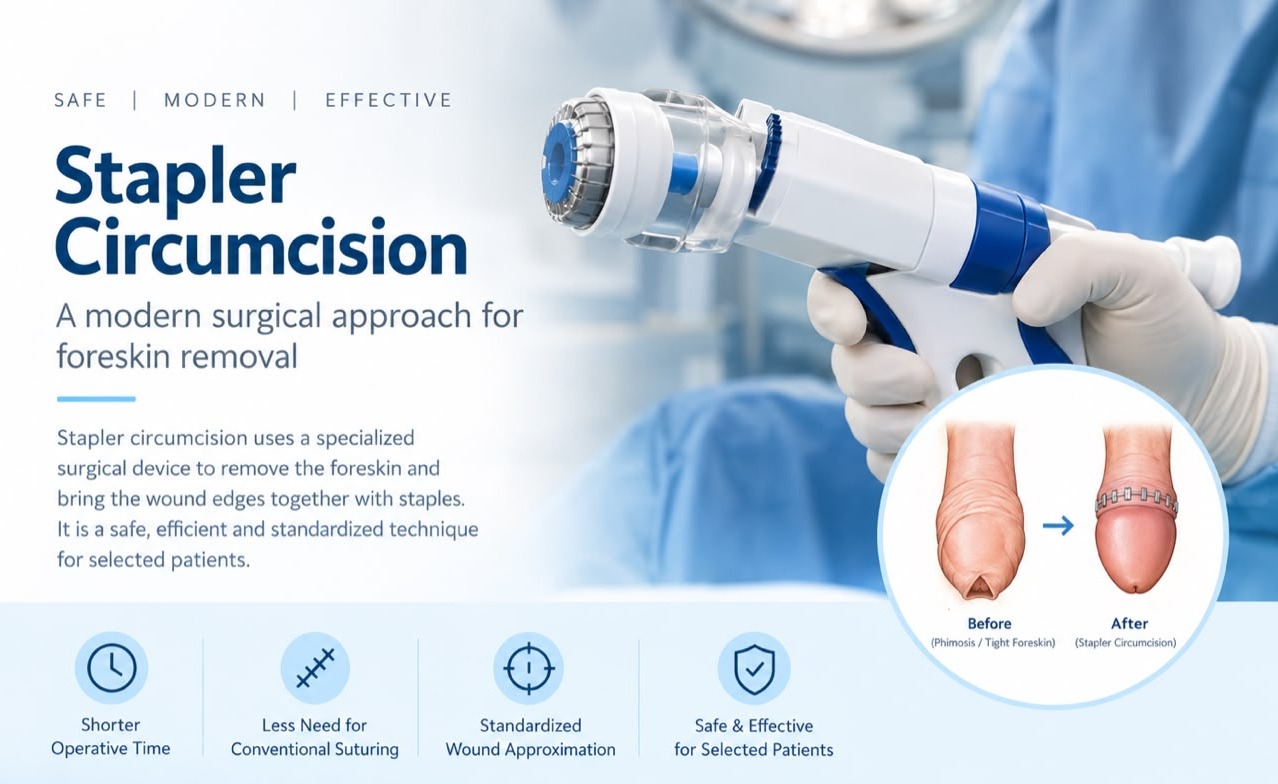
Stapler circumcision is a modern surgical technique used to remove the foreskin (prepuce) covering the head of the penis, known as the glans. The procedure uses a specialized surgical stapling device designed to remove the foreskin and bring the wound edges together in a controlled manner.
Circumcision may be recommended for medical conditions such as pathological phimosis, recurrent balanoposthitis, and certain foreskin-related problems. Stapler circumcision is one of the available surgical options, and its suitability depends on the patient’s condition and clinical assessment.
What Conditions May Require Circumcision?
A urologist may recommend circumcision for several medical reasons, including:
* Phimosis: A condition in which the foreskin cannot be retracted normally over the glans.
* Recurrent balanoposthitis: Repeated inflammation or infection of the glans and foreskin.
* Preputial scarring: Thickening or scarring of the foreskin that causes discomfort or restricts movement.
* Lichen sclerosus (BXO): A chronic inflammatory skin condition that can affect the foreskin and sometimes the urinary opening.
* Functional discomfort: Pain, difficulty with hygiene, or sexual discomfort associated with foreskin problems.
Not every case requires surgery. Depending on the underlying cause, medical treatment or other conservative approaches may be appropriate.
How Is Stapler Circumcision Performed?
Stapler circumcision is performed by a qualified surgeon in an appropriate clinical setting. The procedure generally involves the following stages:
1. Preoperative Assessment
The surgeon examines the foreskin, glans, and urinary opening, evaluates any infection or scarring, and reviews relevant medical conditions, medications, and bleeding risks.
2. Anaesthesia
The procedure is performed using an appropriate anaesthetic technique selected according to the patient’s needs and the clinical setting.
3. Positioning of the Device
A suitable circumcision stapler is selected and positioned carefully to ensure appropriate tissue removal while protecting the glans and urethral meatus.
4. Removal of the Foreskin
The device’s cutting mechanism removes the targeted foreskin, while its stapling mechanism approximates the wound edges.
5. Final Inspection
The surgeon checks the wound, confirms adequate bleeding control, and assesses the placement of the staples before completing the procedure.
The exact technique may vary depending on the device used, the patient’s anatomy, and the surgeon’s assessment.
Potential Benefits of Stapler Circumcision
When performed in appropriately selected patients, stapler circumcision may offer several advantages.
1. Shorter Operative Time
The integrated cutting and stapling mechanism may reduce the time required for certain surgical steps compared with conventional techniques.
2. Reduced Need for Conventional Suturing
The device uses staples to approximate wound edges, potentially reducing the need for individually placed sutures.
3. Consistent Wound Approximation
The circular device is designed to provide standardized wound-edge alignment when correctly positioned.
4. Controlled Surgical Technique
The device provides a structured approach to foreskin removal, although the final outcome still depends on patient selection and surgical expertise.
5. Potentially Convenient Recovery
Some patients may experience a straightforward recovery, but healing time and postoperative discomfort vary from person to person.
Important: These potential advantages are not guaranteed. Outcomes depend on the patient’s condition, the device used, and the surgeon’s experience. Stapler circumcision is not necessarily superior to conventional circumcision in every case.
Stapler Circumcision vs. Conventional Circumcision
The choice between stapler and conventional circumcision depends on clinical findings, patient preferences, and the surgeon’s expertise.
Feature Stapler Circumcision Conventional Circumcision
Technique Specialized cutting and stapling device Surgical excision using conventional instruments
Wound closure Surgical staples Usually sutures
Operative time May be shorter in selected cases Depends on the technique and case complexity
Suitability Depends on anatomy and device requirements Can be adapted to a wider range of anatomical and clinical situations
Complications Bleeding, infection, staple-related issues, and other surgical risks Bleeding, infection, wound-healing issues, and other surgical risks
Both methods can be appropriate when performed by an experienced surgeon. The best approach should be determined after an individual assessment.
Who May Not Be Suitable for Stapler Circumcision?
Stapler circumcision may not be appropriate for every patient. Special evaluation or an alternative technique may be necessary in cases involving:
* Severe active inflammation or infection.
* Extensive foreskin scarring or significant anatomical abnormalities.
* Suspected penile malignancy requiring appropriate diagnostic evaluation.
* Bleeding disorders or other significant surgical risks.
* Conditions in which the selected device cannot be used safely or effectively.
A urologist should determine the most appropriate treatment based on the patient’s examination and medical history.
Recovery After Stapler Circumcision
Recovery varies according to the individual, the surgical technique, and the presence of any complications.
First Few Days
Mild swelling, tenderness, and discomfort may occur. Patients should follow the surgeon’s wound-care instructions, keep the area clean as advised, and use prescribed medication when necessary.
During the First Few Weeks
The wound gradually heals. Patients should attend follow-up appointments and avoid activities that may disrupt healing, according to their surgeon’s advice.
When Can Normal Activities Resume?
Light daily activities may be resumed when comfortable and when advised by the treating clinician. Strenuous exercise, sexual activity, and activities that place pressure on the surgical area should be avoided until healing is adequate and the surgeon confirms it is safe.
Warning Signs to Watch For
Seek prompt medical attention if you experience:
* Persistent or significant bleeding.
* Increasing redness, swelling, or pain.
* Pus or other concerning discharge.
* Fever or signs of infection.
* Difficulty passing urine.
* Changes in the colour or appearance of the glans that may indicate impaired blood flow.
Frequently Asked Questions (FAQs)
Is stapler circumcision painful?
Anaesthesia is used during the procedure to control pain. Some discomfort, tenderness, or swelling may occur afterward and can usually be managed with appropriate medical advice.
How long does stapler circumcision take?
The procedure may be relatively brief, but the total time depends on the patient’s condition, anaesthesia, and clinical circumstances. The surgeon can provide a more specific estimate.
Are the staples permanent?
Many circumcision staplers use staples designed to detach or fall off as healing progresses. The timing varies by device and patient. Do not pull or remove staples yourself; follow your surgeon’s instructions.
Is stapler circumcision better than conventional circumcision?
Not in every case. Stapler circumcision may offer advantages in operative efficiency and wound closure, while conventional techniques may be more suitable for certain anatomical conditions or complex cases. The decision should be individualized.
When can I return to work?
The timing depends on the nature of your work, your discomfort, and your recovery. Your surgeon can advise when it is appropriate to resume normal activities.
Can circumcision treat recurrent balanoposthitis?
Circumcision may help prevent recurrent episodes in selected patients, particularly when foreskin-related problems contribute to inflammation. However, underlying causes such as diabetes, infections, or skin disorders should also be assessed and treated.
Conclusion
Stapler circumcision is an established surgical option for selected patients who require foreskin removal. Its specialized cutting and stapling mechanism may provide an efficient alternative to conventional techniques, but suitability, benefits, and recovery vary between individuals.
A consultation with a qualified urologist is essential to identify the underlying problem, discuss available treatment options, understand potential complications, and choose the most appropriate surgical approach.
Considering circumcision for phimosis or recurrent foreskin inflammation? Consult a qualified urologist for an individualized assessment and treatment plan.
Medical disclaimer: This article is for general educational purposes only and should not replace professional medical advice, diagnosis, or treatment.
Keywords