
Many people ignore recurring pain, swelling, or discharge around the anal area because they assume it is a temporary infection. While these symptoms may improve for a short time with medication, they often return if the underlying cause is not treated. One possible reason is an anal fistula, a condition that usually requires specialised medical evaluation. Understanding Anal Fistula Treatment can help patients seek care before the condition becomes more complex.
An anal fistula is a small abnormal tunnel that develops between the inside of the anal canal and the skin around the anus. It commonly forms after an anal abscess has drained or healed incompletely. Although the condition is not always dangerous, delaying treatment can lead to repeated infections, discomfort, and difficulty carrying out normal daily activities.
What Causes an Anal Fistula?
Most anal fistulas develop after an infection in one of the small glands inside the anal canal. When the infection forms an abscess, it may leave behind a tunnel that continues to cause drainage and inflammation.
Other possible causes include:
- Previous anal abscess
- Crohn's disease
- Inflammatory bowel disease
- Injury to the anal region
- Previous surgery
- Rare infections
Identifying the exact cause helps the surgeon recommend the most appropriate treatment.
Common Symptoms of an Anal Fistula
The symptoms may vary depending on the size and location of the fistula. Some patients experience continuous discomfort, while others notice symptoms only during flare-ups.
Common signs include:
- Persistent pain around the anus
- Swelling near the anal opening
- Recurrent discharge of pus or blood
- Foul-smelling drainage
- Skin irritation around the affected area
- Pain during bowel movements
- Repeated formation of abscesses
Because these symptoms can resemble other anorectal conditions, a proper medical examination is essential for an accurate diagnosis.
Why Medication Alone May Not Be Enough
Antibiotics can help control an active infection, but they usually do not eliminate the fistula itself. The abnormal tunnel often remains beneath the skin, allowing infection to return repeatedly.
This is why many patients notice temporary improvement followed by another episode of pain or discharge after a few weeks or months.
A detailed evaluation helps determine whether surgical treatment is necessary to address the underlying problem.
How Is an Anal Fistula Diagnosed?
Diagnosis usually begins with a clinical examination by a colorectal surgeon.
Depending on the complexity of the fistula, additional investigations may include:
- Physical examination
- Proctoscopy
- MRI scan
- Endoanal ultrasound
- Blood investigations when required
These tests help identify the complete fistula tract and assist in planning the safest treatment.
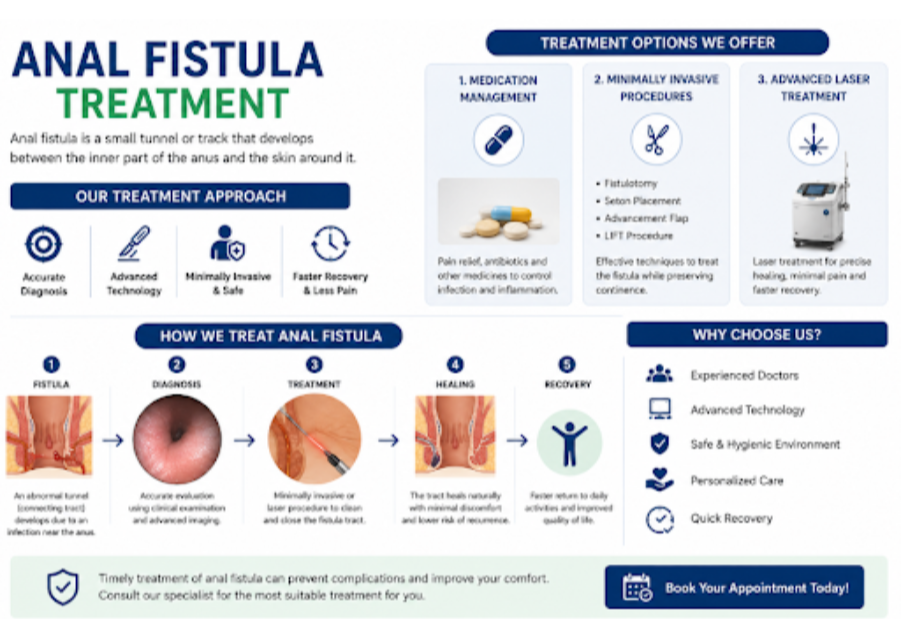
Understanding Anal Fistula Treatment
The most appropriate treatment depends on the fistula's location, complexity, and its relationship with the anal muscles.
Modern treatment options may include:
- Fistulotomy for suitable simple fistulas
- Seton placement in selected cases
- Minimally invasive procedures where appropriate
- Advanced sphincter-preserving techniques for complex fistulas
The primary goal is to remove the fistula while preserving normal bowel control and reducing the risk of recurrence.
The choice of procedure is always based on careful clinical assessment rather than a standard approach for every patient.
Recovery After Treatment
Recovery varies according to the complexity of the fistula and the surgical procedure performed.
Patients are generally advised to:
- Maintain good personal hygiene
- Take prescribed medications
- Follow dietary advice to avoid constipation
- Drink adequate water
- Attend regular follow-up visits
- Keep the surgical area clean as instructed
Most people gradually resume their daily routine while healing progresses under medical supervision.
Why Early Treatment Is Important
Ignoring an anal fistula can increase the likelihood of:
- Recurrent abscess formation
- Ongoing infection
- Multiple fistula tracts
- Greater surgical complexity
- Longer recovery
Early diagnosis often allows treatment before the condition becomes more extensive.
Choosing the Right Specialist
Managing an anal fistula requires experience because every case is different. Patients should consult a surgeon who carefully evaluates the fistula, explains the available treatment options, and recommends an approach based on its complexity.
For individuals seeking Anal Fistula Treatment in Kharadi, Pune, BariFit By Dr. Parmeshwar provides comprehensive evaluation and advanced surgical management tailored to each patient's condition. Every treatment plan focuses on accurate diagnosis, patient safety, and preserving normal function whenever possible.
Do Not Ignore Recurrent Symptoms
Pain, swelling, or repeated discharge around the anal region should never be considered normal. Although these symptoms may seem manageable initially, they often indicate an underlying condition that requires specialised care.
If you have been experiencing recurring anorectal symptoms, seeking timely medical evaluation can help identify the cause and determine the most appropriate Anal Fistula Treatment before complications develop.