

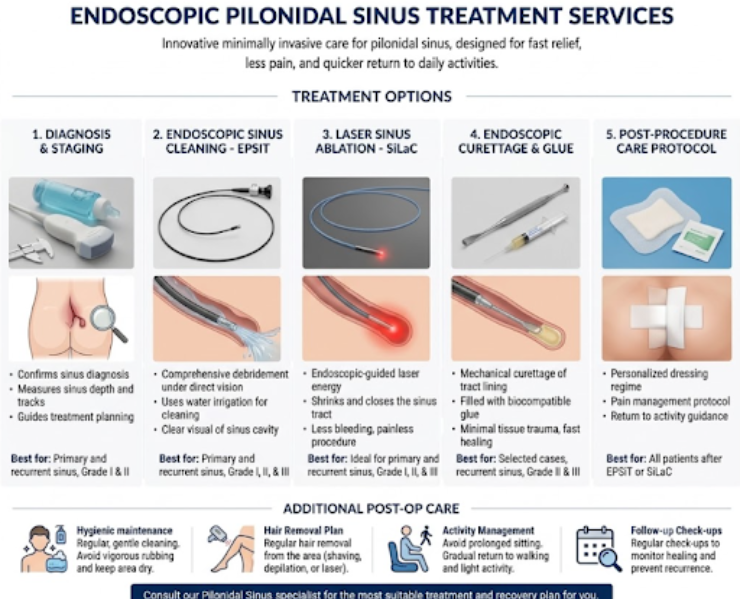
A pilonidal sinus usually develops in the cleft between the buttocks and may cause repeated pain, swelling, discharge or infection. For some people, symptoms settle temporarily and then return, creating an ongoing cycle of discomfort.
Traditional surgical approaches may involve removing the affected tissue through an incision. Endoscopic Pilonidal Sinus Treatment provides a minimally invasive option for selected cases by allowing the surgeon to visualise and treat the sinus tract using an endoscopic technique.
For patients in Kharadi and the wider Pune region of Maharashtra, understanding the differences between available approaches can help when discussing treatment.
What Causes a Pilonidal Sinus
Pilonidal disease commonly involves hair and debris becoming embedded within the skin in the natal cleft. Inflammation can develop around the area, sometimes resulting in an abscess.
Symptoms may include:
- Pain near the tailbone
- Swelling
- Redness
- Intermittent discharge
- Pus or blood from an opening
- Recurrent infection
- Difficulty sitting comfortably
Some people have small openings without major symptoms, while others experience repeated episodes.
What Happens During Endoscopic Treatment
Endoscopic treatment allows the surgeon to enter the sinus tract through a small opening using specialised equipment.
The internal tract can be inspected directly, helping identify hair, debris and affected tissue. The tract is then treated from within according to the technique being used.
One important feature of this approach is that it may avoid the larger wound associated with some conventional excision procedures.
However, minimally invasive treatment is not automatically suitable for every pilonidal sinus.
Why Proper Case Selection Matters
The pattern of pilonidal disease can vary considerably.
Some patients have a relatively limited sinus tract. Others may have multiple openings, extensive branching, an active abscess or recurrent disease following previous procedures.
Before considering Endoscopic Pilonidal Sinus Treatment, assessment may include:
- Number and position of sinus openings
- Previous infections
- Presence of active discharge
- History of previous procedures
- Extent of the sinus tract
- Current abscess formation
- General health and healing factors
The surgeon can then determine whether an endoscopic technique is reasonable or whether another surgical approach may be more appropriate.
Recovery Still Requires Wound Care
A smaller external wound does not mean aftercare can be ignored.
Patients need clear instructions about keeping the area clean, recognising signs of infection and managing hair in the affected region when advised.
Follow-up is also important because recurrence can occur after different types of pilonidal sinus treatment.
Patients should seek review if they develop increasing pain, swelling, fever, persistent discharge or another tender lump around the treated area.
Questions to Discuss During Consultation
Someone considering endoscopic treatment may want to ask:
- How extensive is my pilonidal disease?
- Is an abscess currently present?
- Am I suitable for an endoscopic procedure?
- What other surgical techniques are available?
- How should the wound be cared for?
- When can sitting and normal activities resume?
- What can be done to reduce recurrence risk?
At BariFit By Dr. Parmeshwar, patients with pilonidal disease can be evaluated to determine an appropriate treatment strategy based on the extent and presentation of the condition.
For people in Kharadi and Pune dealing with repeated pilonidal symptoms, obtaining an assessment before another painful flare-up can provide a clearer understanding of the available treatment options.